Lessons in Design Thinking from Indian Railways
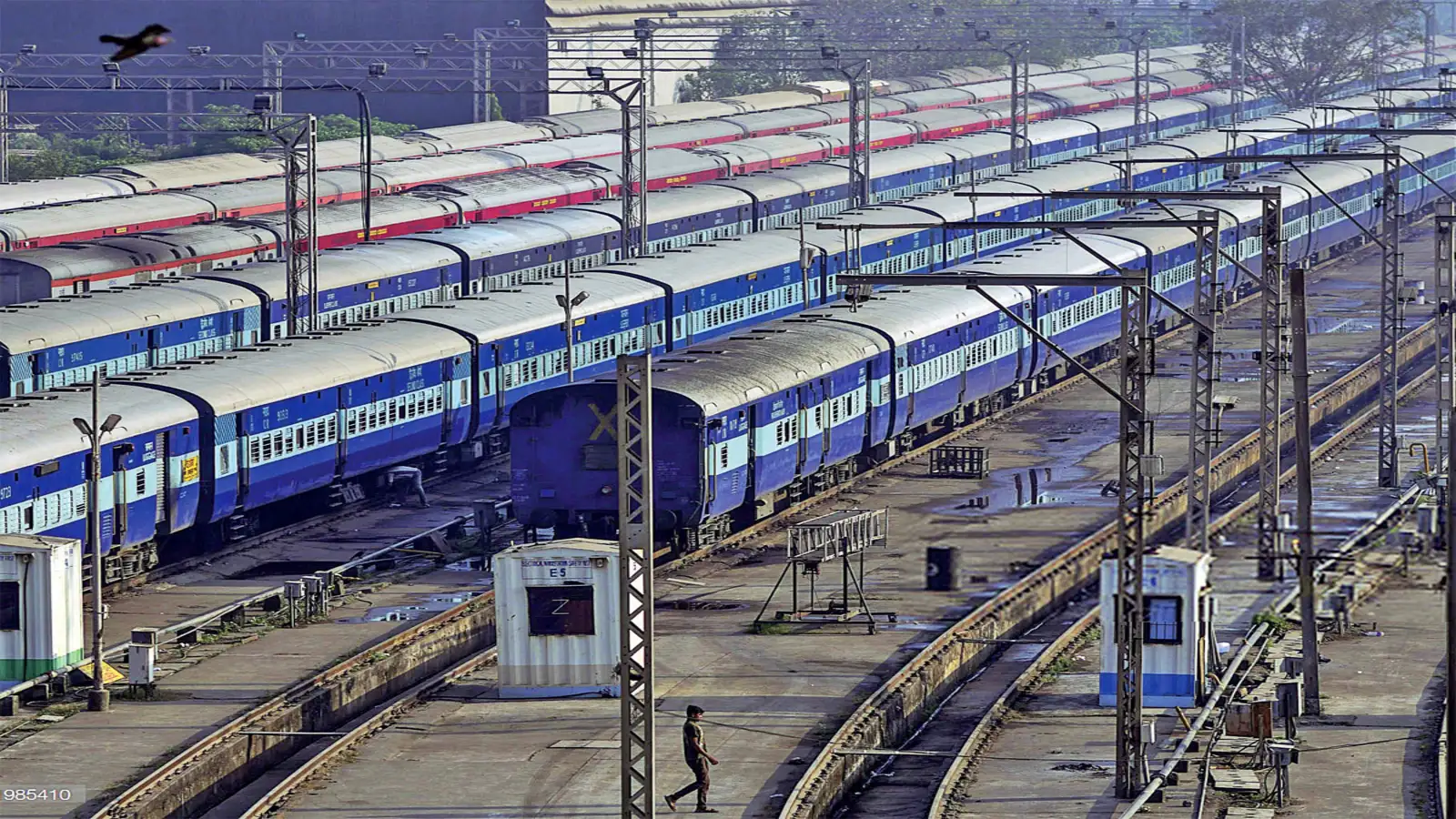

Why a train ticket is more complicated than it looks.
The Beatles came to India looking for enlightenment.
Millions of Indians, meanwhile, have spent decades finding it somewhere between a RAC seat, a cutting chai, and an unexpectedly profound conversation with a stranger on a train.
There is something uniquely democratic about Indian Railways. Students, tourists, business owners, migrant workers, families, pilgrims, and first-time travellers all share the same system. Sometimes the same compartment. And somehow, despite its complexity, it works.
Most of us experience Indian Railways through a handful of touchpoints.
Searching for a train.
Booking a ticket.
Finding the right platform.
Locating our coach.
Arriving at our destination.
But behind that seemingly simple journey lies one of the most complex service systems in the world.
Every day, Indian Railways moves millions of passengers across a network spanning more than 68,000 kilometres. For a surprisingly affordable fare, people can travel across states, cultures, languages, and landscapes. Few transportation systems anywhere in the world operate at this scale while remaining accessible to such a broad population.
What fascinates me isn't the trains. It's the information. Schedules moving across hundreds of stations, Passengers checking live status updates, Station masters coordinating arrivals and departures, Maintenance teams monitoring infrastructure, Vendors, porters, ticketing systems, control rooms, railway police, and operations teams all working within a constantly shifting ecosystem. At any given moment, thousands of decisions are being made.
This is where design thinking becomes interesting. Good design is often described as making things simple. But systems like Indian Railways remind us that good design is actually about managing complexity.
The passenger doesn't need to understand signalling systems. The traveller doesn't need to understand train path optimisation.
The family boarding a train in Pune doesn't need to know how information moves between stations across the country. They simply need confidence that the train will arrive. Design is the bridge between complexity and experience.
Which brings us to AI.
A lot of conversations about AI focus on automation. But the more interesting opportunity is augmentation. AI could help predict maintenance issues before they occur.
It could improve crowd management during peak travel periods.
It could optimise scheduling and reduce delays.
It could help passengers navigate disruptions more effectively.
But there is a reason nobody wants an entirely autonomous railway system making every decision.
Railways are ultimately human systems.
When a train is delayed due to weather, when an elderly passenger needs assistance, when an unexpected disruption affects thousands of travellers, judgement matters.
Context matters.
People matter.
The most effective future may not be one where AI replaces human decision-making, but one where it supports humans at the right moments. Technology handling complexity.People handling ambiguity. In many ways, that is also the essence of design thinking.
Understanding systems.
Understanding people.
And knowing where each belongs. Perhaps that is why train journeys remain so memorable. They are never just about moving from one place to another.
They are about navigating a network of stories, systems, decisions, and human experiences that somehow come together to create a single journey.
Much like good design itself.
References
Government of India, Ministry of Railways (2025) Indian Railways at a Glance. New Delhi: Ministry of Railways.
Indian Railways (2025) Annual Statistical Statement. New Delhi: Government of India.
Norman, D. (2013) The Design of Everyday Things. Revised Edition. New York: Basic Books.
Stickdorn, M., Hormess, M., Lawrence, A. and Schneider, J. (2018) This Is Service Design Doing. Sebastopol: O'Reilly Media.

Rutwik Ingale
Author