The Hidden Infrastructure of Paradise

A few weeks ago, while watching The White Lotus, I found myself paying less attention to the characters and more to the backdrop.
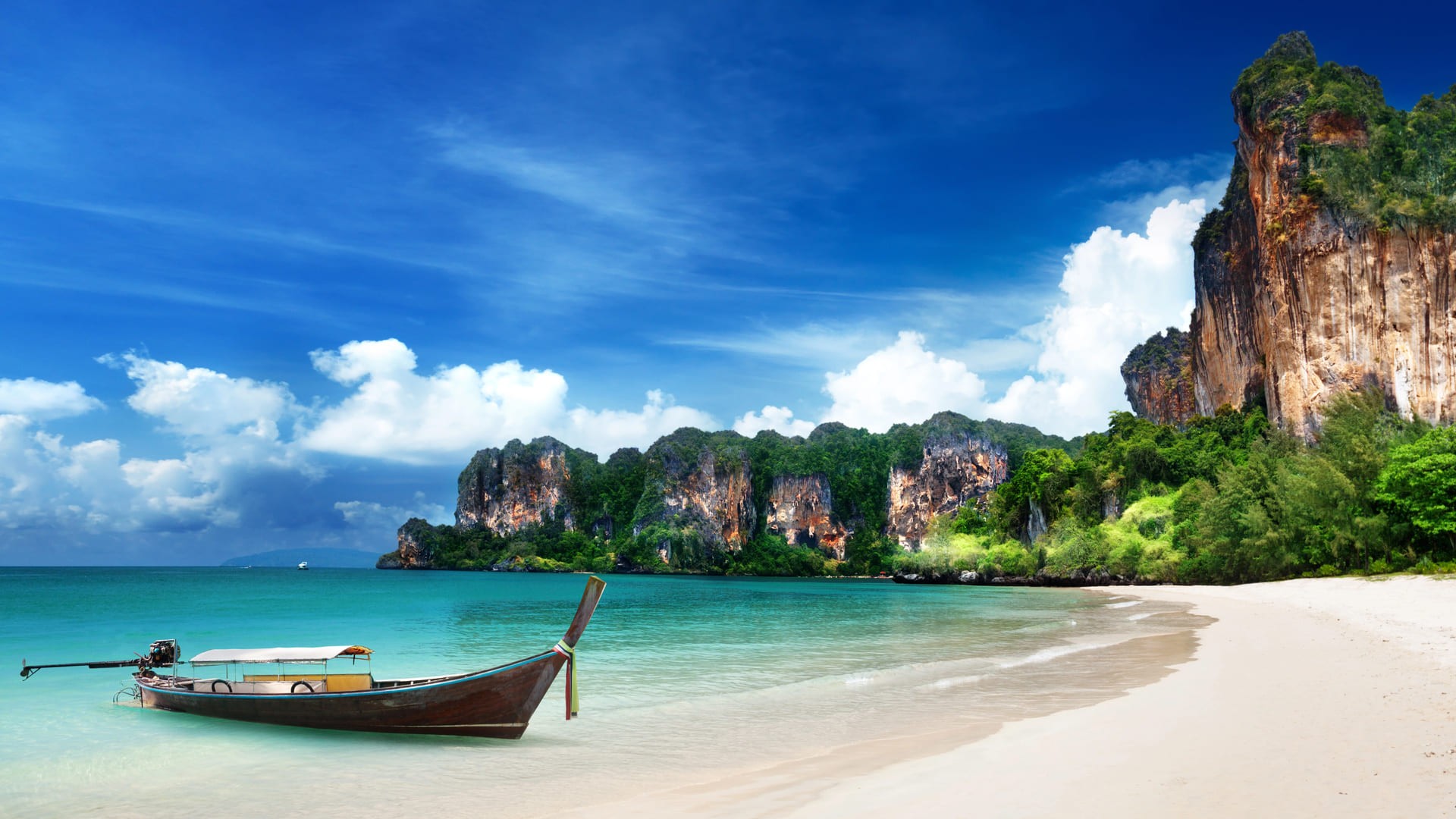
I started writing this while sitting on a beach in Thailand.
Like most people, I should probably have been paying attention to the water. Instead, I found myself observing everything around it.
Tourists arriving from boats. Resort staff preparing for the evening rush. Vendors setting up for sunset crowds. Waste being collected. Supplies being transported through narrow pathways. Drainage channels quietly carrying away water from an afternoon downpour.
The beach itself was beautiful, but what fascinated me was everything that made the experience possible.
As service designers, we spend a lot of time thinking about experiences. Yet the longer I sat there, the more I realised that what we often call an "experience" is really the visible outcome of countless invisible systems working together.
But as any service designer knows, seamless experiences are rarely simple.
In fact, the more seamless an experience feels, the more likely it is that a complex network of systems is working behind the scenes.
The latest season of The White Lotus has already triggered what many are calling the "White Lotus Effect", generating renewed interest in Thailand's luxury tourism destinations and driving increased travel demand for locations featured in the series (NDTV, 2025). The show itself presents an interesting contradiction. While it satirises luxury tourism and privilege, it simultaneously functions as one of the most effective destination marketing campaigns in recent memory (Barnes, 2025).
Yet beneath the postcard-perfect imagery lies a more complicated reality.
As visitor numbers grow, destinations like Koh Samui face challenges that are increasingly familiar across global tourism hubs: infrastructure strain, waste management, environmental degradation, seasonal overcrowding, water shortages, and the complex relationship between local communities and tourism-driven development (Teen Vogue, 2025).
These are not simply tourism challenges.
They are service design challenges.
A tourist never experiences a destination through a single touchpoint.
They experience a journey.
The airport arrival.
The ferry transfer.
The hotel check-in.
The beach.
The restaurant.
The local market.
The waste bins.
The public toilets.
The taxi ride back.
Every interaction contributes to a single perception of place.
For decades, the tourism and hospitality industries have focused on improving individual touchpoints. Better hotels. Better booking systems. Better customer service.
But many of today's problems are systemic.
How do we manage visitor flows without overwhelming local infrastructure?
How do we distribute economic benefits more equitably across communities?
How do we balance tourism growth with environmental sustainability?
How do we create experiences that serve both visitors and residents?
These questions require us to zoom out and look beyond individual interactions. They require us to understand tourism as a service ecosystem.
One of the most memorable examples of this came from my own experience visiting the Phi Phi Islands.
Unlike many tourist destinations, Phi Phi operates with very few conventional vehicles. Most movement happens on foot. Visitors arrive by boat and navigate the island through a network of pedestrian pathways. There are no endless streams of cars, no constant traffic noise, and remarkably few of the mobility systems we typically associate with modern tourism.
And yet, everything works.
Hotels receive supplies.
Restaurants operate efficiently.
Waste is collected.
Thousands of visitors move through the island every day.
What fascinated me most wasn't what was visible—it was what wasn't.
Despite being a tropical island that experiences significant rainfall, the drainage infrastructure throughout many parts of the island is remarkably effective. Water is channelled away efficiently, pathways remain usable, and the visitor experience remains largely uninterrupted.
Most people never notice these systems.
They notice the beach.
They notice the sunsets.
They notice the view.
But they rarely notice the logistics networks, maintenance routines, drainage systems, governance structures, waste collection services, or operational decisions that make those experiences possible.
That, perhaps, is the hallmark of good service design.
When a service works well, the infrastructure disappears into the background.
This is where design research becomes particularly valuable.
Rather than studying only tourists, service designers can investigate the broader ecosystem: residents, local businesses, hotel operators, municipal authorities, transport providers, environmental organisations, informal workers, and policymakers.
Research helps reveal the hidden relationships between these actors and the often invisible factors shaping experiences.
The overcrowded beach is not simply a beach problem.
It may be a transport problem.
An information problem.
A waste-management problem.
A governance problem.
A policy problem.
In other words, it is a service problem. Standing on a beach can be a useful reminder of how services actually work.
Everything appears calm on the surface. But beneath the water, countless forces are interacting simultaneously—currents, tides, ecosystems, weather patterns, and geological systems.
Services operate in much the same way.
The most successful experiences are often supported by layers of invisible infrastructure, coordination, and decision-making.
As destinations like Koh Samui continue to attract global attention and places like Phi Phi navigate the realities of mass tourism, the opportunity for service design is clear.
Not merely to improve individual touchpoints.
But to understand, design, and steward the systems that connect them.
Because the future of tourism will not be determined solely by the beauty of a destination.
It will be shaped by the quality of the services, systems, and experiences that support it.
And much like the best beaches, the best services are often the ones where the complexity remains invisible.
References
Barnes, B. (2025) How The White Lotus became Thailand's best tourism campaign. Los Angeles Times. Available at: https://www.latimes.com (Accessed: 9 June 2026).
NDTV (2025) White Lotus Season 3 popularity leads to tourism boom in Thailand's Koh Samui. Available at: https://www.ndtv.com/travel (Accessed: 9 June 2026).
Polaine, A., Løvlie, L. and Reason, B. (2013) Service Design: From Insight to Implementation. New York: Rosenfeld Media.
Stickdorn, M., Hormess, M., Lawrence, A. and Schneider, J. (2018) This is Service Design Doing. Sebastopol: O'Reilly Media.
Teen Vogue (2025) The White Lotus tourism effect is bringing new challenges to Koh Samui. Available at: https://www.teenvogue.com (Accessed: 9 June 2026).

Rutwik Ingale
Author